For many of us, Scripture memorization is filled with ambitious, hopeful starts and faceplant failures. Can I get an amen?! Even when I’ve managed to memorize entire passages at length, such as when I memorized the Sermon on the Mount or the book of Philippians, the minute I stop practicing is the minute I begin forgetting.
That’s why I’m beginning a project that sounds impossible on paper. I’m memorizing the entire bible. Not just a few verses, but the entire narrative architecture of the Old and New Testament.
And I’m doing it with beads, ropes, and rocks.
Two things, I’m not magic and I’m not a memory champion. I’m a normal guy who, if I’m honest, doesn’t have the best memory (compared to some of my peers in the memory community). What makes what I’m talking about possible is more a shift in mindset than an ability. I’m shifting from rote, verbatim memorization to something a little… different.
The Resolution Problem
The human brain isn’t good at memorizing verbatim, linear text. It can do it (I memorize a poem a day and have done extended memorization of longer texts), but it isn’t good at it. It’s better with spatial navigation, object manipulation, and narrative (myth, specifically).
When it comes to memorizing there’s a limit to amount of details we can hold perfectly. Word for word memorization is the 4k of memorization. But what about concepts? For example, if I say the Apostles’ Creed, does that basically encapsulate the life and story of Jesus? We say it every Sunday at my church and, you better believe it does. But it doesn’t do so perfectly. It doesn’t tell every facet of the story in the nitty gritty details. It offers a low resolution image of the faith. Or, what if I ask you to tell me the story of the resurrection? You could do it and maybe you wouldn’t even miss a detail, but could you do a picture perfect, word for word recital of the Bible? But does word for word even matter if you know the story?
To my mind, it makes much more sense to begin a memorization journey of the Biblical story by memorizing a low-resolution image of the entire book. What if you knew what was going on in every book, and could recite, more or less, the major narrative sections of the entire Bible? What if, too, you could teach others to the do same. That would be something.
Bible Memory Rocks… Literally!
Something really weird happens with our spatial memory. I can easily think back to my childhood home. I can see the front door, I can walk to the kitchen and open the fridge and get a slice of American Cheese. Back in my bedroom I have my sick cherry red, clear coat Electric Guitar (that I, years later, sold for diaper money) and my half stack amplifier (that I never turned to 11 because I was scared it would explode). The funny thing about these memories is that I never tried to remember them and I haven’t been in that house in at least 16 years.
Why is it that we can remember spaces so easily? It happens without us even trying, in hyper realistic detail. And yet, things like numbers and words and names (especially names!) are unbelievably difficult to remember. It’s like our brains weren’t made to remember those types of data points.
Well, I’m not the first guy to notice this and others have built memory techniques around these observations. This is a technique commonly known as the Method of Loci or the Memory Palace Technique. It’s where you think of a space that you can hold in your head, you walk the space in a particular order, and then along the walk you place things you want to remember. It’s the most well-known memory technique and the most talked about on the internet these days, and I think it’s pretty boring.
I just don’t like it. You have to prepare the palaces and solidify them in your mind. Then worry about managing them and how many stations are in the rooms. It’s also completely in the head. I want to FEEL and HOLD something that I can use to help me remember, and I can’t do either of those things with a memory palace.
There are other ways to store data in your head using physical objects or physical locations other than the Method of Loci. These techniques come from oral cultures and work just as well, but are much more fun in my opinion. Lynne Kelly in her book The Memory Code outlines a lot of these techniques and I would encourage you to pick up a copy of her fascinating book if you’re interested.
What I’m doing in my memory technique is a mixture of the Lukasa board of the Mbudye and the Incan Khipu. I’ve merged the tactile and unique feel and look of the Lukasa’s stones with the cascading strings of the Khipu to form a powerful aid to memory and, interestingly enough, a powerful aid to prayer as well (more below).
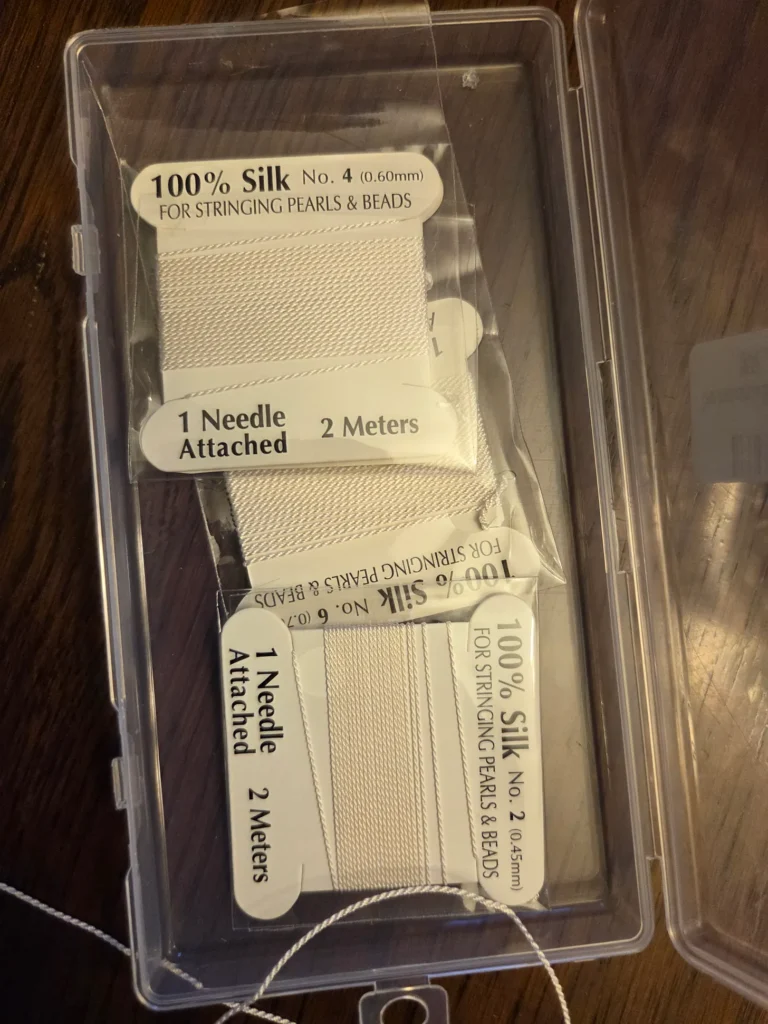
The memory technique is simple enough (and I’ll be chronicling my journey as I go, so you can see it as it grows). Take a silk thread, like they use in pearl necklaces.
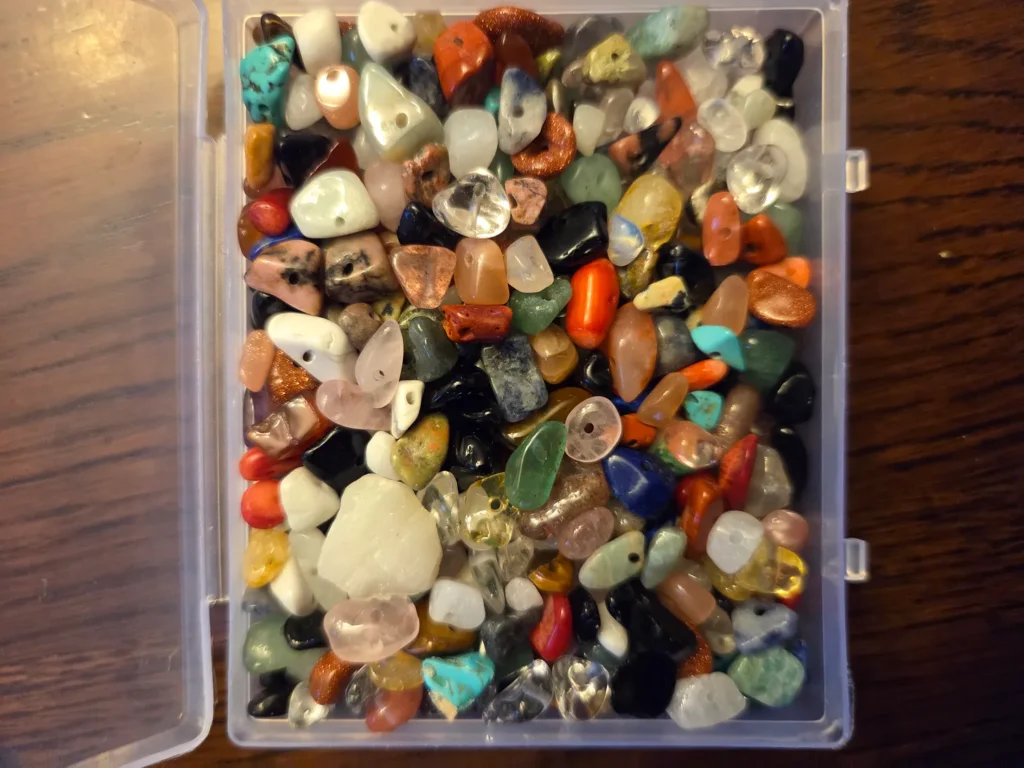
Then get yourself a bunch of little rocks with holes in them, used for jewelry making.
Now, pick something you want to memorize. Let’s say it’s “In the beginning, God created the Heavens and the Earth.” Find a rock that you feel best ties to that idea. For me, it was a sparkling red rock. The red felt like the red clay of the Earth and the sparkling glitter felt like Heaven superimposed, as though Heaven and Earth were one.
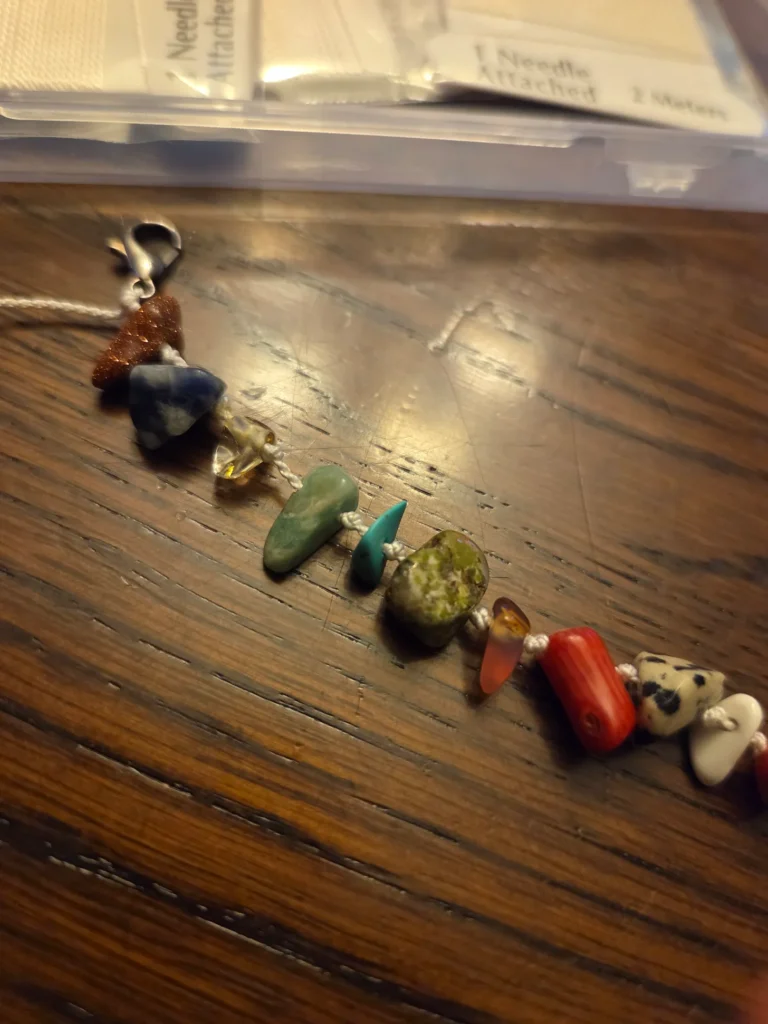
Now, slide the rock onto the thread, tie a knot to hold it in place, and repeat this process through the narrative arc. You’ll get a rope that looks like this.
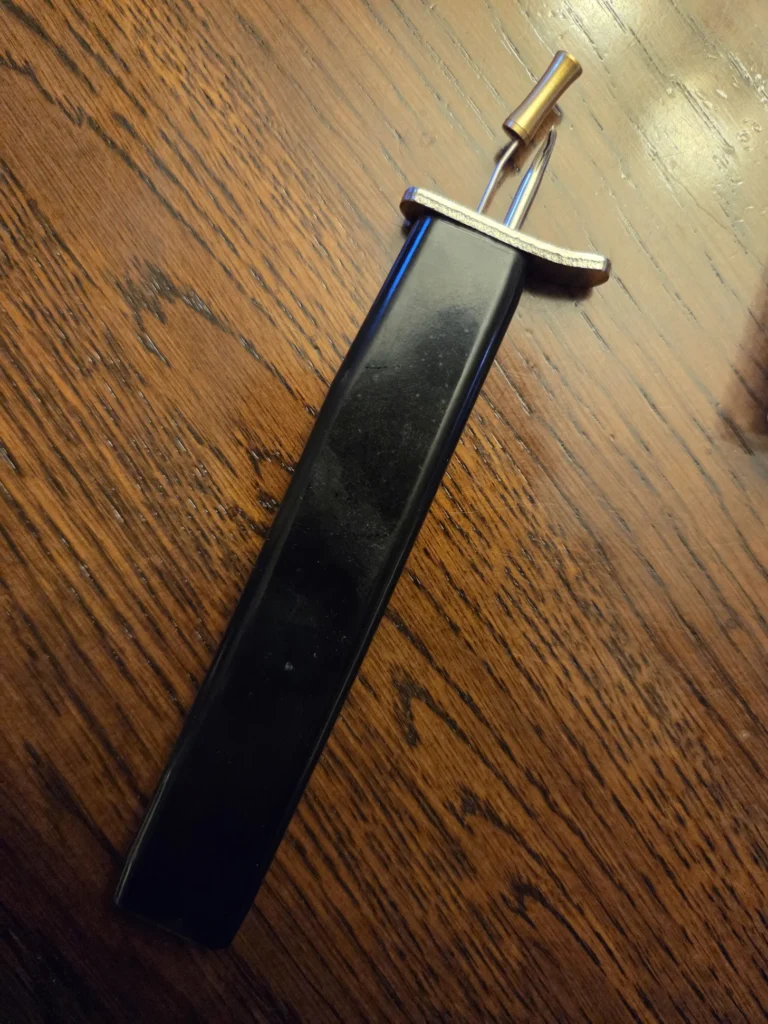
And pro tip, get this tool they use for tying pearl necklaces. After I got good at using it it helped a lot to get the knots right up and next to the rocks.
Memorization and Prayer at the SAME TIME?!?!
I suck at prayer. It’s my true spiritual weakness in the faith. If the goal of prayer was for my mind to wander, for me to forget that I’m praying and instead wonder how many fat molecules are shoved into a chip when it is deep fried, and in some cases to fall asleep, then I’m the best person in the world at prayer, but, alas, it is not so.
Something that’s helped me is memorizing prayers and using them. It’s shifted my mind and gives it something to attach to. If I’m being honest, it’s the only way I’m really good at praying.
While I was organizing this memory method it came to me that I could use it for prayer. The idea is simple: memorize stuff and then attach a repetitive before and after clause to pray through the stations.
For example, here’s my mantra for the creation account.
Mantra: “Oh God, Creator of Heaven and Earth… (phrase)… Have mercy on me, a sinner.”
The phrases are the memories tied to the rocks. Here’s a few.
…who in the beginning created the heavens and the earth.
…who hovered over the face of the waters when the earth was formless.
…who said “Let there be light,” and separated light from darkness.
And so and and so forth…
So, for the very first phrase, I’d say: “Oh God, Creator of Heaven and Earth, who in the beginning created the heavens and the earth, have mercy on me, a sinner.”
I’d repeat this prayer, acknowledging God as creator, stating something God did in creation, and then asking for mercy through each of the phrases. While praying I look at the rock and remember the phrase that is attached to it.
Now, the memory and prayer system scales a little more complicated than this and I’ll get to that in later posts, but for now this is essentially the idea. By using these ropes and a prayer schedule, after a few years I should have the entire Bible memorized and I should be able to mature into a more consistent and rich prayer life.
Let me know your thoughts.